
From Genoese trading colony to Banks Street, from shipyard warehouses to Istanbul Modern.
Today Karaköy brings to mind cafés, art galleries and old buildings brought back to life. But its story is that of one of Istanbul's oldest harbour and trading districts, and Gecekuşu's building is part of it. In this post we describe the transformation of the district we see from our seventh floor.
Harbour and trade
Karaköy sits where the Golden Horn opens onto the Bosphorus, and for centuries it was one of the centres of Istanbul's maritime trade. The waterfront of Galata, a Genoese trading colony in the Byzantine period, developed under the Ottomans as the quarter of the port, customs and merchants. In its narrow streets, the places of worship of different communities rose side by side among sailors' lodgings, inns and warehouses.
Bankalar Caddesi and the hans
By the late nineteenth century Karaköy's slopes had become the Ottoman financial centre. Voyvoda Street, now known as Bankalar Caddesi (Banks Street), filled with grand buildings of banks and insurance companies, while the hans all around became home to merchants, shippers and small workshops.
Shipyards and warehouses
The shipyards along the Golden Horn and the warehouses that served them formed Karaköy's working face for much of the twentieth century. Shops selling ship parts, ropes, hardware and paint filled the streets. Gecekuşu's building was built in this period as a store for ship supplies.
Rebirth
From the late 2000s Karaköy changed rapidly. Empty warehouses and hans became cafés, galleries, design studios and hotels. A major redevelopment of the port area renewed the cruise terminal and public spaces, and Istanbul Modern opened in its new building on the Karaköy waterfront in 2023.
Looking from the rooftops
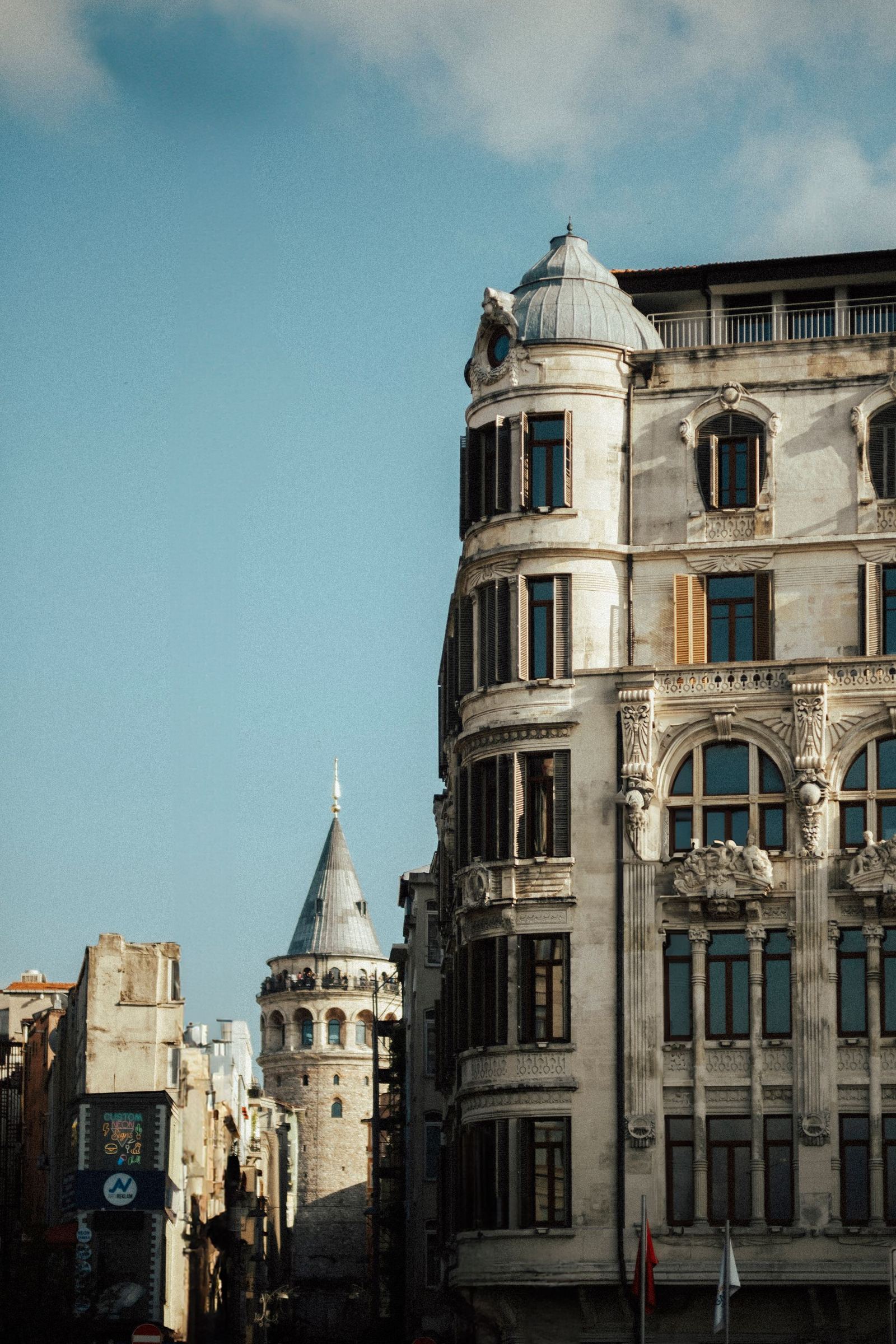
Karaköy's rooftops offer one of Istanbul's most striking views. From our terrace you see Galata Tower to one side, the Historic Peninsula with the silhouettes of the Süleymaniye and the New Mosque opposite, and below, the point where the Golden Horn meets the Bosphorus. At sunset the sun sinks behind the domes of the old city, a single frame that tells the district's centuries-long story.
When you visit Karaköy, take in the old buildings on Bankalar Caddesi, the hardware shops of Kemeraltı Street and the waterfront promenade. Then finish the evening on our seventh floor, facing the view.
The sounds of the district
Karaköy's sound today comes from old and new living side by side. In the morning the hardware shops raise their shutters; in the afternoon exhibition openings begin outside the galleries; and in the evening the crowds heading home to Kadıköy and Üsküdar fill the waterfront by the ferry pier. We are glad to be part of this, giving an old warehouse new life, and we deliberately kept its brick walls and iron beams as reminders of the district's working past.
Related Posts
 Karaköy and the Kitchen
From Kars Gruyère to the Divle Cave: Anatolian Cheeses
The story of the seven cheeses with geographical indications on our board, and tips for building a cheese board.